
BEST PORTUGAL BRANDS
Article by Joana Beirão
The ceramics of Vietri sul Mare reveal an unexpected connection between the architecture of Paolo Soleri and the work of Manuel Cargaleiro.
A trip along the Amalfi Coast where pottery, know-how and Portuguese memory meet.
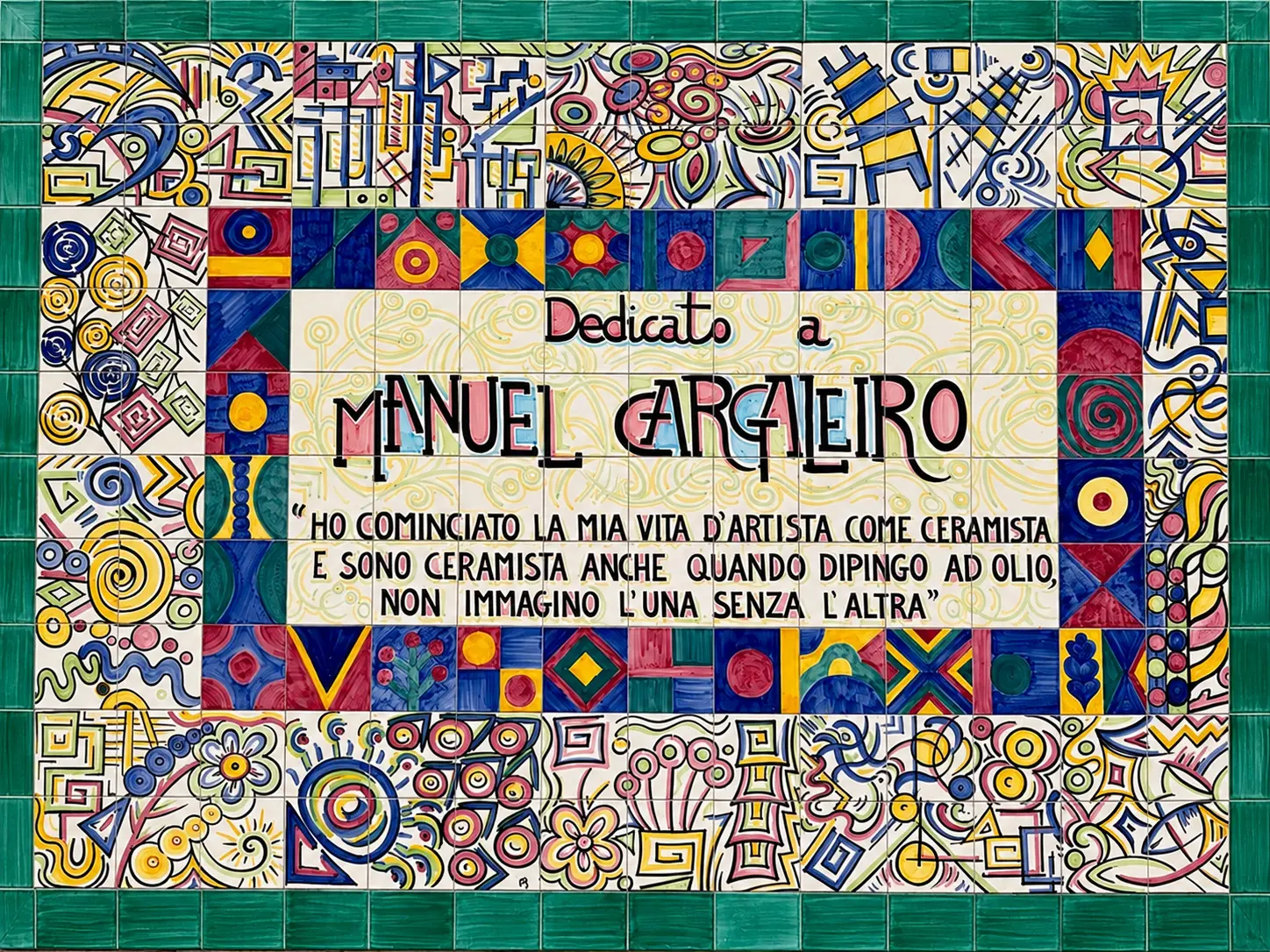
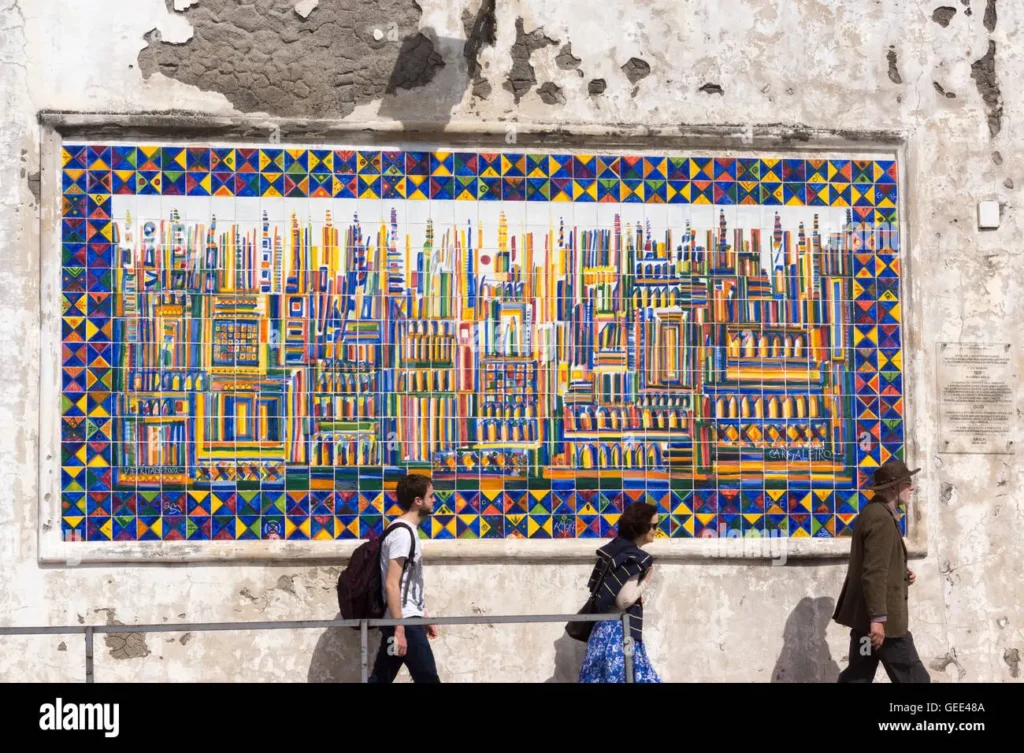
Ceramic panel dedicated to Manuel Cargaleiro, em Vietri sul Mare.
“I started my life as an artist as a ceramicist and I am a ceramicist even when I paint in oil. I can’t imagine one without the other”, Manuel Cargaleiro
Traveling has such a beautiful ability to increase our curiosity. We move away from the known days, we leave the same paths behind and, little by little, we look again with more time. On this trip to Italy, through Neapolitan lands, Puglian and Amalfi, the ceramics of Vietri sul Mare brought us precisely that, the joy of discovery and an unexpected connection with Portugal.
There is something rejuvenating about letting your eyes wander. A facade that makes us stop, a color combination we would never try, a small workshop that invites us to take a look. For those who work with environments, materials and creation, these moments are food. Awaken ideas, undo certainties and remind us how good it is to continue learning.
Italy offers many of these encounters. On a sightseeing trip where we were running away from rain and tornadoes, no destination scheduled at departure so, here in Vietri sul Mare, at the entrance to the Amalfi Coast, that this tour gained an even more special meaning.
We were going to visit a ceramics factory. We ended up finding a little of our own.
Vietri sul Mare, a village that reveals itself in its know-how and materials
In Vietri, pottery accompanies the tour. Appears in stores, facades, pavements and in details that make us slow down. More than a simple photographic souvenir to take away from your trip, becomes a genuine way of recognizing and feeling a place.
Here there is a proximity between what is produced and what is seen. The pieces belong to the village, to its colors and to the lives of those who continue working the clay, proudly. The local ceramic tradition dates back several centuries, a continuity that helps to understand the importance of Solimene in this territory.
It was this relationship between place and know-how that aroused our curiosity, with the factory itself telling us the story before we even enter. So we went to find out a little more, the day was rainy but our eyes were experiencing an intense sun.
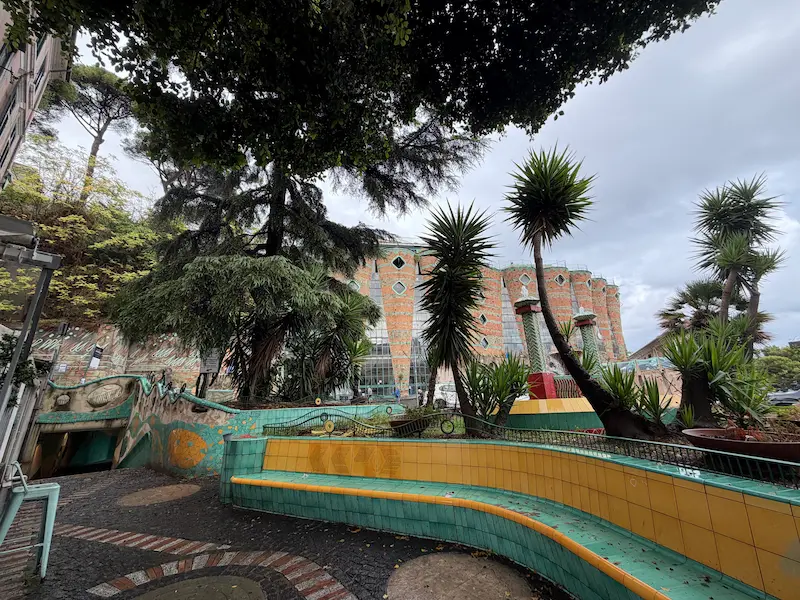
Solimene Artistic Ceramics, em Vietri sul Mare.
Solimene, the factory that celebrates ceramics in architecture
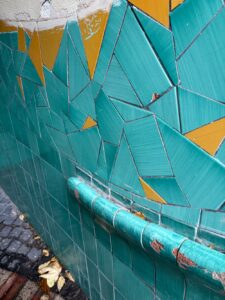
Solimene Artistic Ceramics, designed by Paolo Soleri, Italian-American architect, and opened in 1954, occupies a narrow plot of land between the rocky slope and the road. The facade volumes lean towards the outside, gaining space, while large glazed surfaces let in light.
Thousands of small red and green ceramic vases line the building. The material produced by the factory becomes part of its architecture, giving texture and color to the facade. Not inside, branched pillars and a continuous ramp articulate the different work levels.
It is this coherence that captures our gaze. The factory presents itself through what it does. The ceramic goes out of scale of the object, grows and turns into a building.
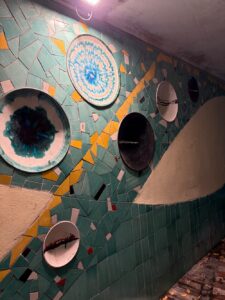
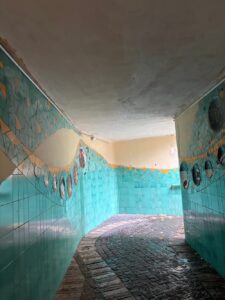
For those who like to discover production sites, there is a particular beauty here. A good place where a craft can inspire a space, territory and how architecture can give expression to the identity of a company and a community. But it doesn't stop here, its expression expands to the central square, a garden for walks and contemplation, walls, banks and unexpected specific details.
Paolo Soleri, the architect who thought about the relationship with nature
Paolo Soleri was an Italian architect who attended the Frank Lloyd Wright school and developed much of his career in the United States. He became known for “arcology”, an idea that brings architecture and ecology together, and seeks ways to live with less space and resource consumption.
Solimene is his only work built in Italy. Now I meet Vincenzo Solimene, businessman and ceramicist, left a unique architecture, thought of in a territorial relationship and the activity it hosts.
When you see her, we feel like looking again. To understand the shapes, get closer to the materials and discover what happens beyond that facade.
E, suddenly, we found Manuel Cargaleiro
And during this tour a Portuguese surprise appears and we find a tribute to Manuel Cargaleiro.
Recognize your name, brought a greater emotion. The joy of meeting someone of our own in a place we were still getting to know, summer (and yes, we didn't know that he had been there and that there was this complicity) but suddenly it made perfect sense. Realizing that your presence was part of the memory of that community, gained superlative value.
In the panel we photographed, we found the phrase that immediately brings the artist closer to the universe we had come to discover:
«I started my life as an artist as a ceramicist and I am a ceramicist even when I paint in oil. I can’t imagine one without the other.”
Manuel Cargaleiro
After the factory visit, those words gained a special resonance. The clay, the painting, architecture and the work of hands seemed to meet on the same sidewalk.
Who was Manuel Cargaleiro
Manuel Cargaleiro was born in 1927, in Chão das Servas, in the municipality of Vila Velha de Ródão, and died in 2024. He is one of the great names in Portuguese art, with a work in which painting and ceramics feed each other. The vibrant colors, geometric rhythms and the reinvention of tiles made its language unmistakable, which is why we obviously and immediately recognize your panel.
He divided his career between Portugal and France, collaborated with Viúva Lamego and also found in Italy a fertile territory for creating. The ceramic tradition of Vietri sul Mare brought it closer to the Amalfi Coast, where did you receive it, em 1999, o Grande Prémio Internacional Journey through Ceramics.
This connection was born, em 2004, o Museo Artistico Industriale Manuel Cargaleiro, em Vietri sul Mare. Em 2015, a inauguração da Fondazione Museo Manuel Cargaleiro, in Ravello, continued the artist's presence in the region and the dialogue between Portuguese and Italian ceramics.
His brand also extended to public space, leaving color and ceramics within reach of those who stroll by. A presence that prolongs the encounter between the artist, the crafts and life of the places.
We then went to research, and we realized that Cargaleiro had found in this region a place of creation and recognition. Us, so many years later, we unexpectedly found signs of this relationship. And it was beautiful to realize that a trip could still offer us this surprise, discover an artist we thought we knew better, and feel Portugal a little closer.
Always learning, always know, with the joy of someone who allows themselves to be surprised.
A tribute that continues in the hands of others
The panel with the artist's words keeps an idea that remains in our memory, the continuity between the different ways of creating.
Vietri also pays tribute to him through a ceramic composition inaugurated in May 2025, at the confluence of Corso Umberto I with Piazza Vincenzo Solimene, close to the place where the museum dedicated to the artist operated.
Made by ceramic students from Salerno, with the support of La Vietrese, this panel uses shapes and colors from Cargaleiro’s language. There is something moving about this transition between generations, young people who learn a craft and find in the work of a Portuguese artist a starting point to create.
The tribute becomes, like this, a continuity. The memory of the master remains in the public space and in the work of those who began.
Em Amalfi, the joy of recognizing one of our own
We followed the coast road, between easy curves and counter-curves at this time of year, views of the sea and the attention shared by everything that surrounded us, when a tile panel made us look differently. Those colors, those geometries, that familiar rhythm. He was a freighter.
There's a cheesy, exciting emotion that's hard to explain in this recognition. – It's the unexpected given to discovering another country that we love, and we find a presence that belongs to us too. Feel like smiling, draw the attention of those who go with us and those who pass by, and share that little pride, almost as if we had met someone we knew.
Em Vietri sul Mare, the tribute had awakened our curiosity due to its connection to the region. Em Amalfi, it was the work itself that came to meet us, in view of those who walk along the coast. E, for moments, the tour gained an unexpected intimacy.
We did not photograph the panel. We were happy to recognize him and the desire to better understand the path that took a Portuguese artist there.. It was this desire that we brought to this article, prolong the discovery and share it with those who read us.
Return with a renewed look
We went to Italy for a walk, know places, date and give space to discovery. We brought images, ideas and this little story, a factory that expresses itself through ceramics, a tribute in Vietri sul Mare and a new encounter with Cargaleiro's work in Amalfi.
It is these encounters that make a journey so fertile for creativity.. We return with other references and with more desire to repair, to experience and tell what we saw.
With Portugal Doing Good®, We try to find out what is being done, who does it and the places where this knowledge remains alive. On this trip to Naples, Puglia and Amalfi Coast, this look found a bridge between countries, made of clay, color and memory.
Discover what Portugal does well, far from home and unexpectedly, It has an even more special flavor. It was really cool!
