
BEST PORTUGAL BRANDS
Article by Isabel Maria
Quando a oficina se transforma num lugar de visita, a indústria revela o conhecimento, o tempo e as pessoas que dão valor aos objectos.
Enquanto designers, aprendemos a olhar para um objecto para além da sua forma final. Interessa-nos perceber como foi pensado, que matéria o constitui, quais as ferramentas utilizadas e que decisões foram tomadas durante a produção. Interessa-nos, above all, conhecer as pessoas e o território que tornaram possível a sua existência.
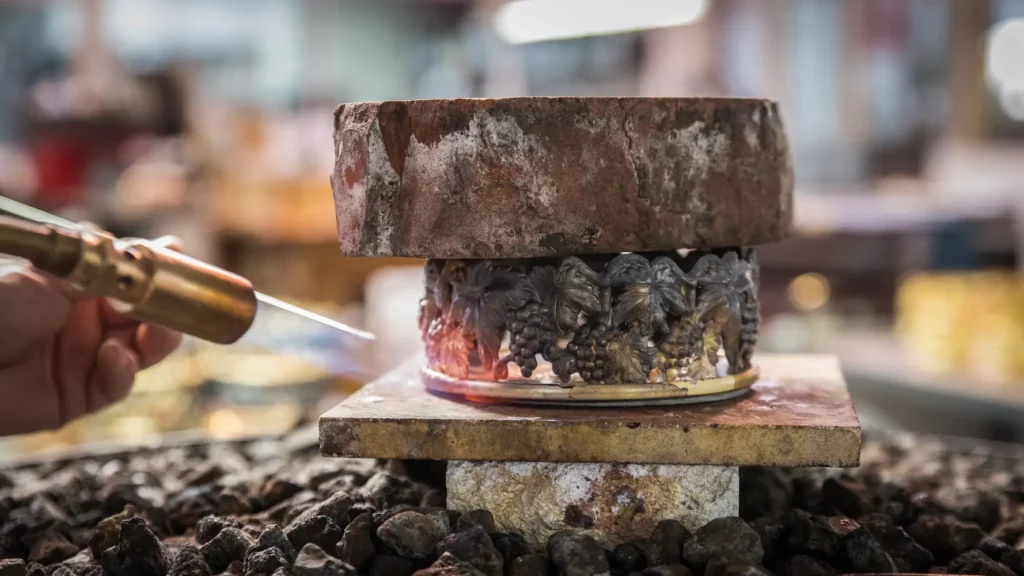
É precisamente esta forma de olhar que faz de Gondomar um lugar tão relevante para compreender a filigrana portuguesa. Here, uma peça não começa na montra. Começa muito antes: no domínio do metal, na preparação do fio, na organização da oficina, na experiência acumulada e nos gestos sucessivamente aperfeiçoados. Visitar Gondomar é, that's why, entrar no interior do objecto.
A filigrana como sistema de design
À primeira vista, a filigrana impressiona pela delicadeza. However, por detrás da aparência leve existe um processo produtivo exigente, composto por várias operações, ferramentas e competências especializadas.
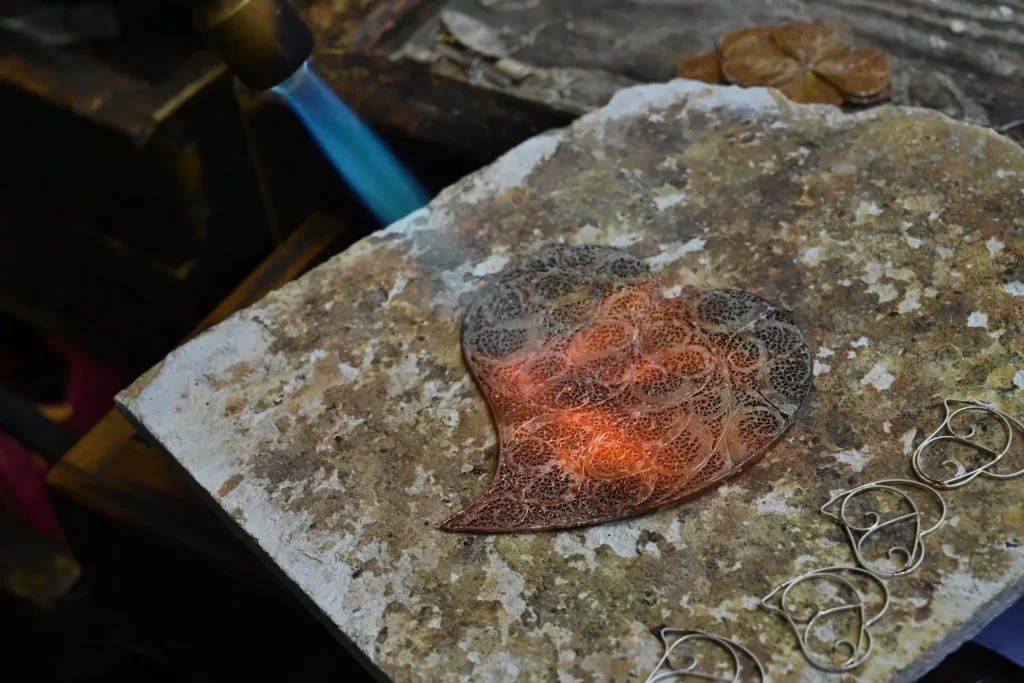
O metal é transformado em fios extremamente finos, posteriormente torcidos, trabalhados e aplicados no interior de estruturas previamente definidas. O preenchimento exige controlo, precisão e uma extraordinária compreensão da matéria. Cada elemento depende do anterior e qualquer pequena alteração pode modificar o equilíbrio de toda a peça.
Vista desta perspectiva, a filigrana é também um sistema de design.
Existe uma relação permanente entre estrutura e ornamento, resistência e leveza, repetição e diferença. O desenho estabelece a ordem, mas são as mãos de quem produz que interpretam essa ordem e lhe dão expressão. Mesmo quando duas peças partem do mesmo modelo, conservam os sinais de uma produção manual que nunca é inteiramente uniforme.
É nessa margem, entre a regra e o gesto, que encontramos o seu valor.
Uma indústria feita de conhecimento
É frequente associarmos a palavra indústria a grandes edifícios, linhas automatizadas e produção em série. Gondomar propõe-nos uma leitura mais abrangente. A indústria também pode existir numa oficina de pequena escala, organizada em torno de ferramentas específicas, funções complementares e conhecimento transmitido entre gerações.
A filigrana não é apenas uma manifestação artística ou uma recordação do passado. É uma actividade produtiva que reúne artesãos, enchedeiras, empresas, instituições de formação, estruturas de certificação e canais comerciais. Faz parte de uma economia e de uma cultura industrial que continuam activas.
Em Gondomar, a concentração deste saber contribuiu para criar uma identidade territorial própria. A oficina tornou-se simultaneamente espaço de produção, aprendizagem e continuidade cultural.
Compreender este ecossistema é essencial para não reduzir o artesanato a uma imagem romântica. As peças são delicadas; o sistema que as produz é complexo.
Ver produzir muda a forma de consumir
O Turismo Industrial tem a capacidade de tornar visível aquilo que, habitualmente, permanece escondido do consumidor.
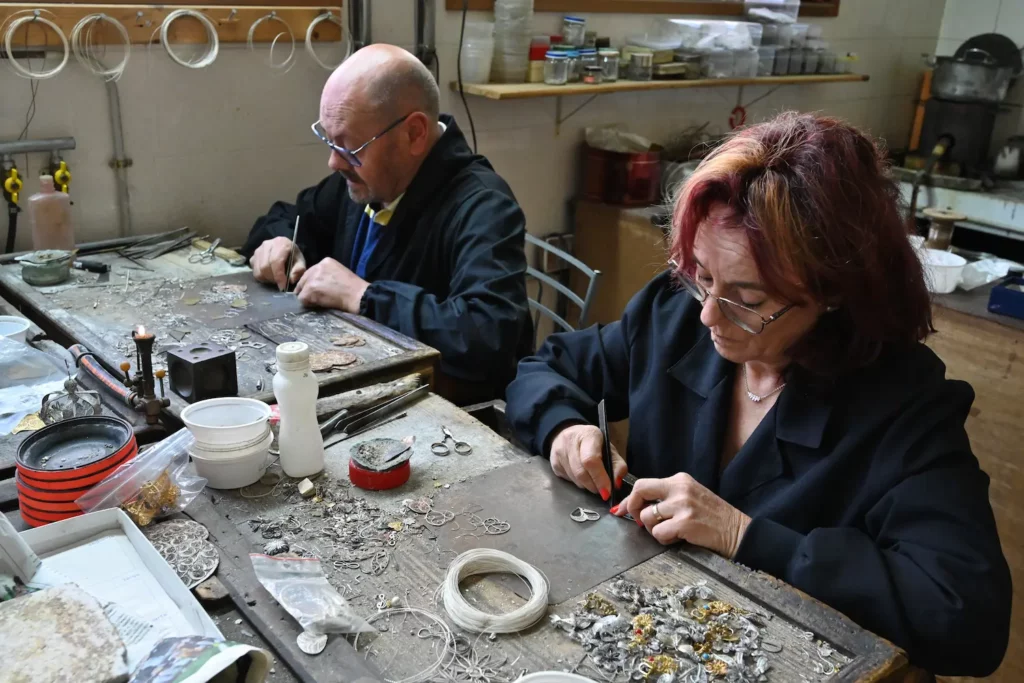
Quando observamos a construção de uma peça, compreendemos por que motivo determinados objectos exigem tempo. Percebemos a importância da experiência, o valor das ferramentas e a dificuldade de substituir certos gestos. Reconhecemos também a diferença entre uma produção artesanal identificada e uma imitação que reproduz apenas a aparência do produto.
A visita à oficina funciona, like this, como uma forma de literacia material. Ensina-nos a ver melhor.
Depois de acompanhar o percurso do fio e a minúcia do preenchimento, deixamos de avaliar uma peça apenas pelo seu peso, brilho ou preço. Passamos a reconhecer o conhecimento incorporado na peça. O Turismo Industrial aproxima produção e consumo, criando uma relação mais consciente entre quem faz, quem visita e quem compra.
Para os produtores, esta aproximação representa uma oportunidade de comunicar valor sem depender exclusivamente da exposição comercial. Para o visitante, oferece uma experiência que não pode ser reproduzida fora do território.
Um percurso entre museu, oficina e formação
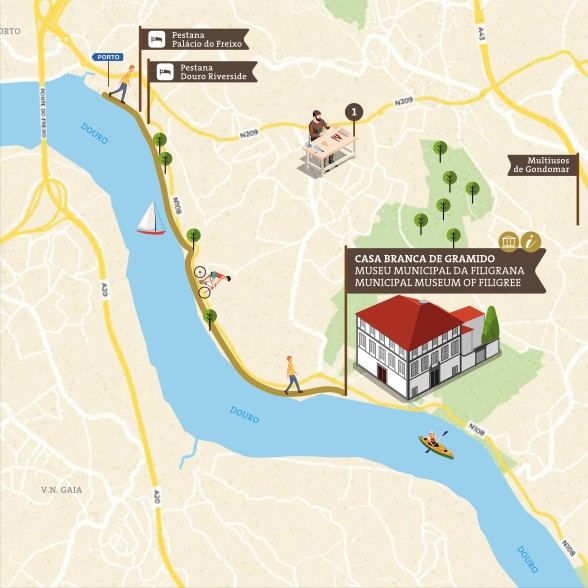
Filigree Route permite descobrir este universo através de diferentes portas de entrada.
No Museu Municipal da Filigrana de Gondomar, instalado na Casa Branca de Gramido, encontram-se objectos, utensílios, maquinaria e peças que contextualizam a evolução da actividade. O museu funciona também como ponto de partida para conhecer os protagonistas e os lugares onde a filigrana continua a ser produzida.
Nas oficinas aderentes, o visitante aproxima-se da escala real do trabalho. Observa as bancadas, as ferramentas e a distribuição das tarefas. Escuta histórias que dificilmente caberiam numa legenda museológica e percebe como cada espaço desenvolveu a sua própria cultura produtiva.
No CINDOR – Centro de Formação Profissional da Indústria de Ourivesaria e Relojoaria — torna-se visível outra dimensão essencial: a transmissão. A continuidade da filigrana depende da capacidade de formar novos profissionais, atualizar competências e criar condições para que o conhecimento possa evoluir.
Museum, oficinas e centro de formação não são etapas isoladas. Together, mostram o ciclo completo de uma indústria: memória, produção e futuro.
O turismo como parte da cadeia de valor
Para um território industrial, receber visitantes não significa transformar as oficinas em cenários. Significa integrá-las numa nova cadeia de valor, capaz de acrescentar conhecimento, reconhecimento e novas oportunidades à atividade existente.
Uma boa experiência de Turismo Industrial deve respeitar o ritmo da produção e a identidade de cada espaço. Deve traduzir processos complexos sem os simplificar em excesso e criar condições para que os artesãos possam apresentar o seu trabalho sem deixar de trabalhar.
É aqui que o design assume um papel relevante.
O design pode ajudar a estruturar percursos, organizar informação, melhorar a interpretação dos processos e relacionar espaços distintos numa narrativa coerente. Pode também contribuir para desenvolver experiências, comunicação e produtos que prolonguem a visita, mantendo uma ligação autêntica à produção local.
Não se trata de redesenhar a filigrana a partir do exterior. Trata-se de desenhar as condições para que o seu valor seja melhor compreendido.

Gondomar não mostra apenas o que produz
Ao abrir os seus espaços produtivos, Gondomar apresenta algo mais profundo do que uma colecção de objectos. Mostra como o conhecimento se organiza num território.
A filigrana permite falar de património, mas também de indústria, emprego, formação, autoria, inovação e continuidade. Permite compreender que a identidade de um lugar não reside apenas nos seus monumentos, mas também nas competências das pessoas que aí vivem e trabalham.
É esta combinação que torna o Turismo Industrial particularmente relevante: a possibilidade de visitar um território através daquilo que ele sabe fazer.
Em Gondomar, o fio de metal funciona como uma linha de ligação. Une desenho e produção, oficina e museu, tradição e aprendizagem, indústria e turismo. Ao segui-lo, descobrimos que o futuro da filigrana não depende apenas de preservar formas antigas. Depende de continuar a criar valor em torno do conhecimento que lhes dá origem.
Visite o Directory e conheça as oficinas e pontos turísticos e de formação de Gondomar conheça um POrtugal único
